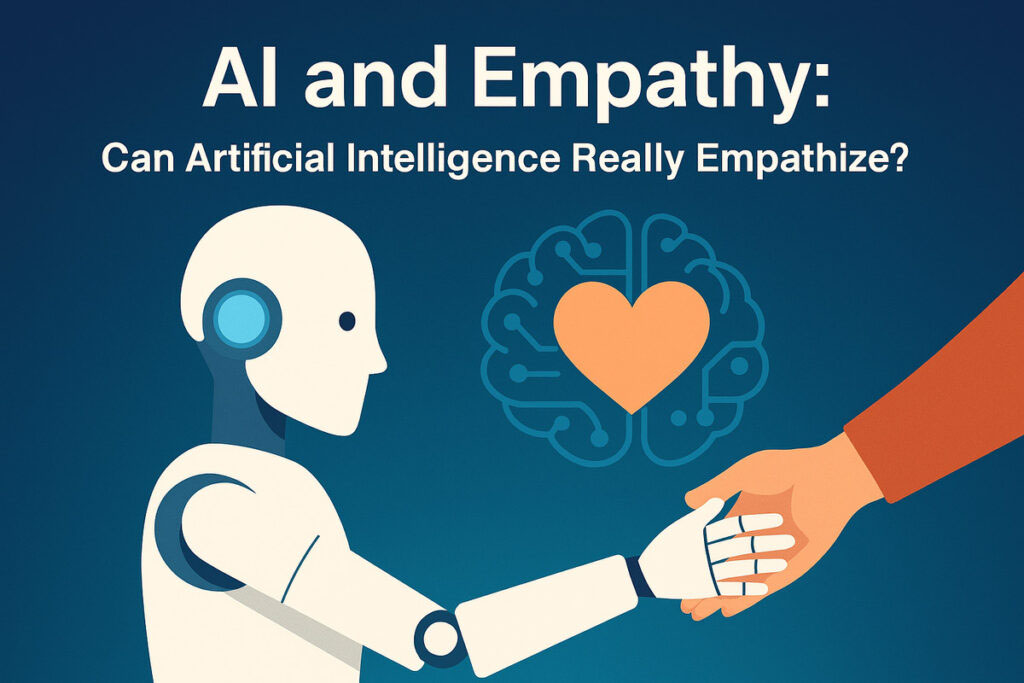
AI And Empathy: Can Artificial Intelligence Really Empathize?
Artificial intelligence has now become a part of our lives. Sometimes we share our troubles, sometimes we ask for advice. But does artificial intelligence really understand us? A customer service bot calming an angry user, an AI therapist providing emotional support, or an assistant using empathetic language… All of these examples lead us to a single question: Can artificial intelligence truly empathize, or is it merely imitating empathy? This question brings with it not only a technological, but also a philosophical, psychological, and ethical debate. In this article, we will examine whether artificial intelligence truly understands us or simply acts as if it does. Let’s take a closer look together.
What Is Empathy?
Empathy, in its simplest definition, is the ability to understand another person’s emotions and respond appropriately to those emotions. However, this definition remains superficial. True empathy emerges from the combination of lived experiences, body language, tone of voice, past experiences, and subconscious processes. When humans empathize, they feel not only what is said, but also what is left unsaid.
For this reason, empathy is the cornerstone of human relationships. Trust, connection, and a sense of meaning are built through empathy. So, to what extent can a system with no experience, no body, and no ability to truly “feel” emotions imitate this process?
How Does Artificial Intelligence ProduceEmpathy?
Today, artificial intelligence systems do not feel empathy; they model it through data. Large language models analyze millions of texts to learn which words are used in which emotional states. How does a person speak when they are sad, which expressions do they choose when angry, which patterns repeat under stress… Artificial intelligence recognizes these patterns statistically.
Thanks to this, it can produce sentences such as “I feel that you are upset.” However, there is an important distinction here: artificial intelligence does not understand; it only generates the correct response. This reveals the difference between empathy and empathetic language. Artificial intelligence can use empathetic language, but it does not possess an empathetic consciousness.
Why Do People Tend to Believe in Empathetic AI?
Interestingly, people tend to attribute empathy even to systems that do not actually empathize. The reason for this is a psychological mechanism known as “projection.” The human brain is inclined to attribute consciousness and intention to the entity it interacts with. Especially an artificial intelligence that uses natural language, provides consistent responses, and creates a feeling of being “understood” is easily perceived as human-like.
This can produce positive results in the short term. People may express themselves more comfortably and feel less lonely. However, in the long term, the one-sided nature of this bond carries the risk of turning into an emotional illusion.
Is Empathy Simulation Sufficient for Us?
From a practical perspective, empathy simulation may be sufficient in many areas. For customer service, educational support systems, or guidance applications, artificial intelligence acting “as if it understands” can facilitate the process. What matters here is that the system does not cause harm and does not mislead users.
However, when it comes to mental health, trauma, or deep emotional processes, the picture changes. Empathy is not only about choosing the right words, but also about taking responsibility. Artificial intelligence cannot truly assume responsibility for the emotional impact it creates.The danger at this point is this: people may confuse empathy simulation with real empathy.
Can Artificial Intelligence Truly Learn Empathy?
This question actually conceals another one: Is empathy something that is learned, or does it emerge through experience? Human empathy is shaped by experiences such as pain, loss, joy, and failure. Artificial intelligence, on the other hand, does not possess these experiences. It only knows their narratives.
For this reason, artificial intelligence “learning” empathy means producing responses that resemble empathy, not developing an empathetic consciousness.
In the future, as biological and digital systems become more intertwined, this boundary may become blurred. However, with today’s technology, empathy still carries a depth that is unique to humans.
Is Artificial Intelligence’s Empathy Ethical?
When designing empathetic artificial intelligence, the most critical issue is transparency. Users must know that the system they are interacting with is not a human and does not possess real emotions. Otherwise, the risk of emotional manipulation emerges.
There is a difference between a system saying “I understand you” and truly understanding. When this difference is concealed, empathy ceases to be a supportive tool and turns into a mechanism of control.
In conclusion, artificial intelligence does not experience empathy today, but it can reflect it. This reflection can be supportive when used correctly, and misleading when used incorrectly. The real issue is not giving empathy to artificial intelligence, but how humans balance their need for empathy with technology.Empathy is not merely a reaction, but a responsibility.The being that still carries this responsibility best is the human. Artificial intelligence can imitate empathy; however, the context, experience, and conscience that give empathy its meaning remain the compass of humanity.
The future will be shaped not by empathetic machines, but by humans who do not lose their empathy.
Contributed by GuestPosts.biz